
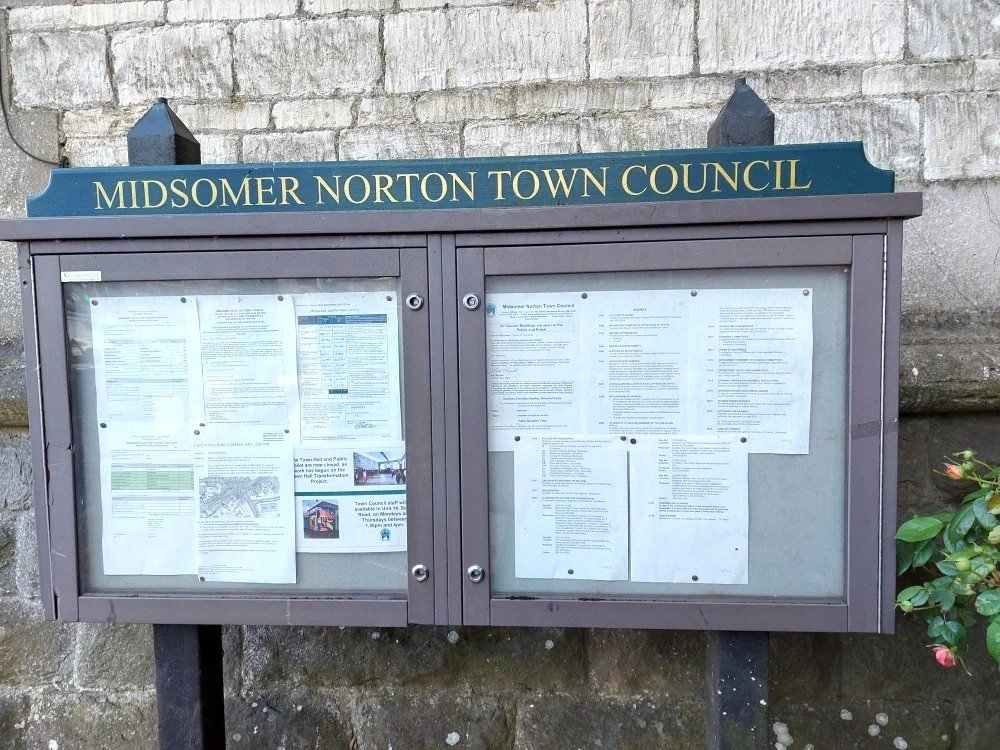
Recent financial information published by Midsomer Norton Town Council shows that almost £36,000 has been allocated to provide Locum Finance Manager support.
The proposal was first considered by the Council’s Staffing Committee on 9 February 2026. It was subsequently considered by the Finance and Operations Committee on 16 February and approved by Full Council on 2 March.
The proposal was based on a confidential report prepared by the Town Clerk. The published records do not explain why the Council decided to appoint a Locum Finance Manager rather than recruit a directly employed finance officer, or why the additional support was considered necessary.
The detailed reports and discussions concerning the appointment and its funding were considered in confidential session. The press and public were excluded under powers of the Public Bodies (Admission to Meetings) Act 1960 on the grounds that publicity would be prejudicial to the public interest because of the confidential nature of the business.
Council papers for the 2 March Full Council meeting show that £19,280 was proposed to be transferred from the Council’s General Reserve to its Employment Services budget. This was in addition to £16,640 already identified within an Employment Services budget, bringing the publicly identified provision for the locum arrangement to £35,920.
The Council’s financial management has historically been undertaken by the Town Clerk or the Deputy Clerk.
The additional spending comes after the Council’s 2025–26 internal audit identified several areas requiring improvement.
Although the Internal Auditor concluded that the Council’s overall system of internal control was in place and generally adequate, the report’s action plan raised concerns about the absence of a complete financing statement for the Town Hall refurbishment, accounting and audit-trail weaknesses, VAT documentation and the need for specialist VAT advice relating to the Town Hall project.
The audit also recommended improvements to budgetary control, reporting of material variances, supporting records and compliance with the Council’s financial regulations.
In addition, the interim audit report warned that, if the Council’s projected deficit was realised, total reserves could fall to approximately £140,000, below the minimum level recommended in national guidance to ensure that councils retain sufficient funds to meet unexpected costs.
Alongside the locum finance arrangement, the Council is recruiting a new Property and Assets Manager. The position is being advertised with a salary of up to £42,839.
If the successful applicant is appointed at the top of the salary range, the post could cost the Town Council approximately £59,000 a year once estimated employer National Insurance and Local Government Pension Scheme contributions are included.
On these estimates, the Locum Finance Manager arrangement and a full year of employing the Property and Assets Manager at the top of the advertised scale could together cost approximately £95,000 a year.
Town Council Accounting Statements show that staff costs increased from £133,099 in the year ending 31 March 2024 to £176,697 in the year ending 31 March 2026. This represents an increase of approximately 32.8% over two years. If expenditure of approximately £95,000 were added to the Council’s existing staffing and employment-support costs, the combined total would be more than twice the staff costs recorded for 2023–24.
In February, the Town Council approved a 20.7% increase in its precept, the amount paid by Council Taxpayers to fund Town Council services.
The increase in staffing and specialist support follows a series of major decisions taken by the Town Council earlier this year.
During January and February, the Council had to take over the management of both the Somer Centre and Orchard Hall after Midsomer Norton Community Trust decided that due to a lack of Town Council funding, it was not financially feasible for them to manage the buildings beyond the end of March.
In February, Councillors also decided to bring the management and delivery of community events previously supported through the Community Trust under direct Council control.
These changes have transferred additional property and events administration responsibilities from the Community Trust to Council Officers. This may partly explain the decision to increase staffing, although the Town Council have not publicly stated why additional staff are required.
Following the Town Council’s funding decision, Midsomer Norton Community Trust was forced to make its manager redundant.
Residents may now reasonably ask what benefits the additional staff will provide and how the increase in expenditure will improve services for people and businesses in Midsomer Norton.


so at a time when they are nearly broke, they choose to spend £90k per annum on a “unspecified” new finance post to investigate finances….. The Emperors New Clothes returns with a vengeance